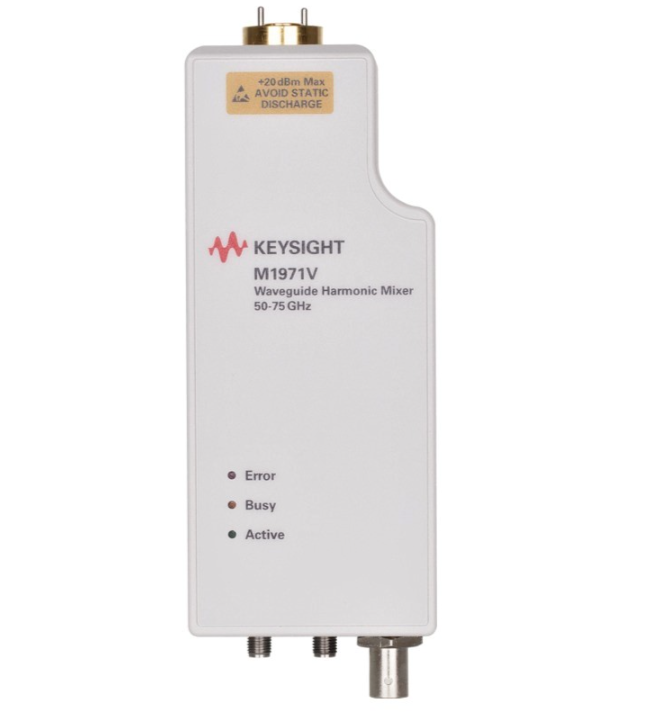
Keysight M1971V is a high-performance waveguide harmonic mixer, mainly used in microwave and RF testing fields. It is suitable for signal analysis, spectrum measurement and other scenarios, and can be used with signal analyzers and other equipment to achieve accurate down-conversion of high-frequency signals. With excellent frequency coverage and signal conversion performance, the mixer can convert input signals in a high-frequency range into intermediate frequency signals that can be easily analyzed by test equipment. It provides reliable support for high-frequency signal testing in radar, communication, aerospace and other fields, meeting the high-precision requirements for high-frequency signal measurement in R&D, production and maintenance processes.
-
Frequency Range: Input frequency covers 26.5GHz to 40GHz, and intermediate frequency output range is 9kHz to 2.9GHz, adapting to the down-conversion testing needs of high-frequency signals.
-
Harmonic Order: Supports 2nd to 11th harmonic mixing, which can flexibly match the conversion needs of different input frequencies and intermediate frequency outputs, expanding the applicable range of test frequencies.
-
Conversion Loss: Typical conversion loss is low, with a typical value of ≤12dB in the input frequency range of 26.5GHz to 40GHz, reducing signal attenuation and ensuring signal conversion efficiency.
-
Input Power Range: Maximum input power is +10dBm, and minimum detectable input power is low, adapting to testing scenarios of high-frequency signals with different intensities.
-
Waveguide Interface: Adopts standard waveguide interface (such as WR-28), featuring good mechanical compatibility and stable signal transmission, facilitating docking with various waveguide systems and test equipment.
-
Noise Performance: Low noise figure, with a noise figure of ≤15dB under typical operating conditions, reducing signal noise interference during mixing and ensuring the purity of intermediate frequency output signals.
-
Operating Temperature: Supports a wide operating temperature range, usually 0℃ to 55℃, adapting to different ambient temperature conditions such as laboratory and outdoor testing, improving usage flexibility.
-
Calibration Compatibility: Compatible with the calibration functions of mainstream signal analyzers, and mixing accuracy can be optimized through equipment calibration to ensure the accuracy and consistency of long-term test data.