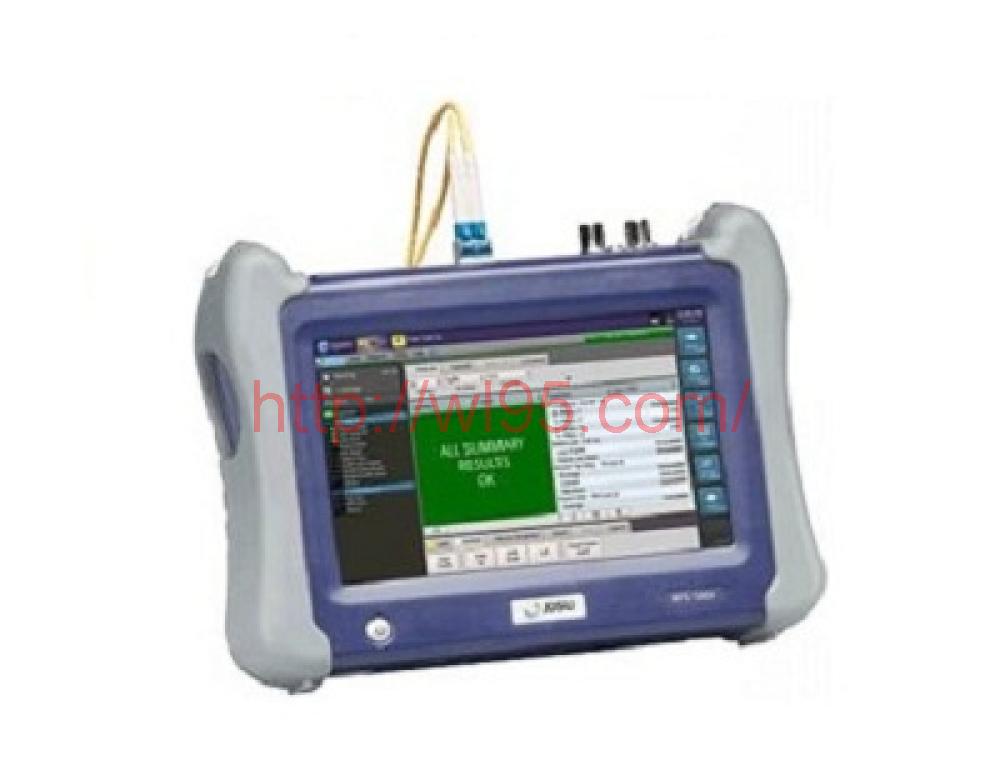
Product Description:
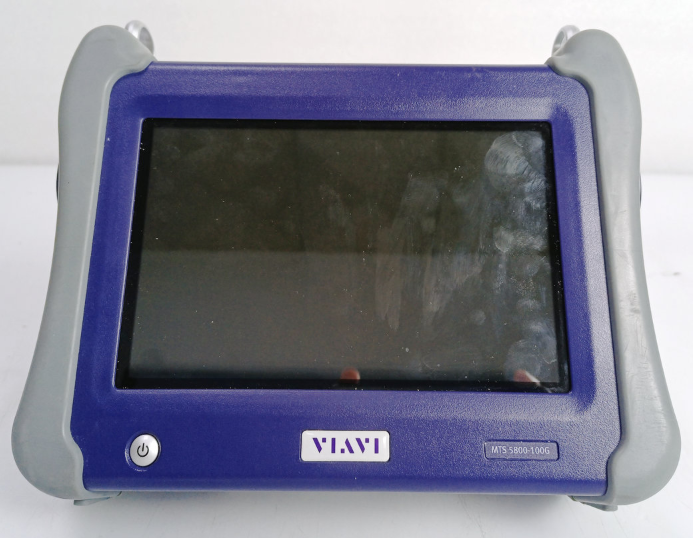
The MTS5800-100G is a high-performance optical network testing platform launched by VIAVI, specifically designed for the deployment, acceptance, and maintenance of 100G and higher-speed optical transmission networks. This device integrates multi-protocol testing capabilities and supports mainstream network standards such as OTN, Ethernet, SDH/SONET, etc., enabling comprehensive performance verification from the physical layer to the higher-level protocols. It is equipped with a high-precision signal analysis module, which can accurately measure key parameters such as optical power, wavelength, dispersion, OSNR, etc. The test dynamic range is up to 40dB, meeting the strict requirements of complex scenarios such as long-distance trunk lines and data center interconnections. The device adopts a modular design, supports function expansion and flexible configuration, is paired with an intuitive touch-screen interface and automated test scripts, significantly improving testing efficiency.
Product Features:
High-speed full-form factor support: Optimized for 100G optical networks, compatible with OTN, 100G Ethernet (100GBASE-LR4/ER4, etc.), SDH/SONET, and other formats. It can seamlessly adapt to the testing requirements of next-generation ultra-high-speed networks.
High-precision parameter measurement: The optical power measurement accuracy is ±0.1dB, the wavelength measurement resolution is 0.01nm, the OSNR test dynamic range is 40dB, which can accurately capture the subtle changes of signals and provide reliable data for network performance evaluation.
Multi-dimensional performance verification: Covers the full stack testing from the physical layer (optical signal quality), data link layer (frame structure, bit error rate) to the application layer (protocol interaction). It can simulate complex network loads and verify the stability of equipment under extreme conditions.
Modular flexible expansion: Adopting a plug-in functional module design, it supports expanding interface types (such as LC/SC) and increasing test frequency bands according to testing requirements, reducing equipment upgrade costs and adapting to network technology iterations.