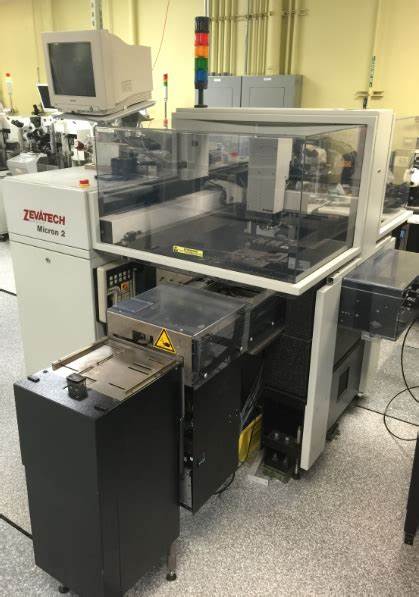
Product Description:
Mold connectors are specialized machines for semiconductor packaging processes that securely attach semiconductor molds to substrate or lead racks. The mold connection process is a critical step in the overall packaging process, as it ensures that the mold is properly secured and electrically connected to the substrate. Various technologies are used to achieve accurate and reliable mold accessories. A common method is to use an epoxy resin adhesive to bond the mold to the substrate. The mold and substrate are carefully aligned, and the epoxy resin is distributed on the bottom. The mold is then placed on the epoxy resin and pressed with controlled force to ensure proper adhesion. Another technique is to use welding to join molds. In this method, solder paste or preform is applied to the substrate and the mold is placed on it. The assembly is then heated to melt the solder, forming a strong bond between the mold and the substrate. Mold accessories are equipped with advanced features to ensure accurate mold placement and alignment. These machines often have vision systems that use cameras to accurately detect the position and orientation of the mold. This allows for real-time adjustments during the die connection process to achieve optimal placement accuracy. The mold attachment also features an advanced heating and cooling system to control the temperature during epoxy curing or solder reflux, ensuring proper bonding and avoiding any thermal damage to the semiconductor mold. In addition to accurate placement and reliable bonding, mold adhesives also play a role in improving manufacturing efficiency. These machines are designed for high throughput, quickly connecting molds and reducing production time. They can also handle a variety of substrate sizes and shapes, adapting to the different requirements of semiconductor packaging. Mold accessories are an important part of the semiconductor packaging process, helping to ensure the quality, reliability and performance of electronic devices.