Product Description:
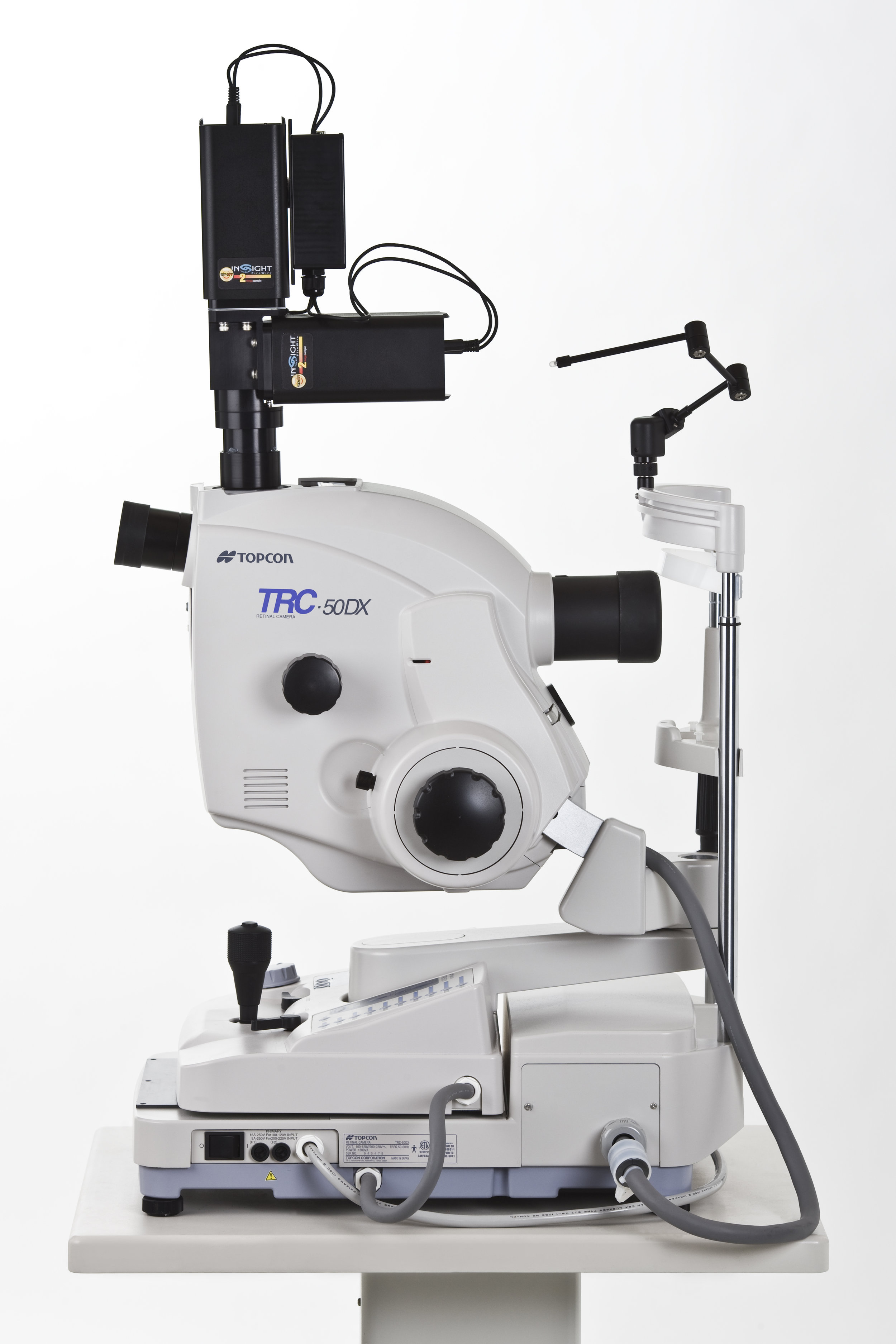
Oxymap T1 was developed specifically for the Topcon TRC-50DX/EX fundus camera.
It consists of a custom optical adapter and two high-resolution digital cameras (1600 x 1200 square pixels) that produce high-quality images in a 50° field of view without sacrificing the pixel resolution of the entire container.
Oxymap Analyzer software stores fundus images and subject data in its database and allows users to study retinal oxygenation and blood vessel width in individual populations, health and eye diseases, or compare oxygenation before and after treatment. Color-coded oxygen saturation values give a quick idea of retinal oxygenation. The user can also select the ship segment of interest, exclude the ship area from the calculation, obtain detailed analysis and record the numerical results.
Features:
Retinal vascular oxygen saturation during 100% oxygen respiration in healthy individuals indicates a significant difference in the individual's arteries and veins between: (1) breathing indoor air, (2) breathing 100% oxygen, and (3) breathing indoor air again. It shows that the instrument is sensitive to changes in oxygen saturation.
In retinal oxygen saturation measurements, images must be standardised: methodological analysis evaluated the repeatability of measurements and showed that the standard deviation of repeat saturation measurements in the same vascular segment was 1.0% in arterioles and 1.4% in venules.
In the retinal blood vessel oxygen saturation of healthy individuals, oxygen saturation in the retinal blood vessels of healthy eyes was measured to determine the influence of age, sex, and cardiovascular parameters, as well as the reliability of measurement and terrain differences. When the eyes of 120 healthy individuals aged 18-80 were measured, the oxygen saturation of the retinal arterioles was 92.2 + -3.7% and that of the venules was 55.6 + -6.3%.
In porcine spectrophotometric retinal oximetry, the validity of Oxymap T1 measurements was compared with porcine blood gas analysis and intravitreal oxygen partial pressure (pO2) measurements. The conclusion is that there is a difference between humans and pigs, i.e. the oximetry is sensitive to changes in porcine oxygen saturation and is associated with both intravitreal pO2 measurements and femoral artery pO2.