Product Description:
All HTPRTS and SPRTS are subject to mechanical shock no matter how carefully you handle them. This impact changes the electrical resistance characteristics of the platinum and manifests itself as a temperature measurement error. Annealing relieves the stress caused by mechanical shocks on platinum sensors, so NIST recommends annealing before calibrating SPRTS.
In addition to removing mechanical stress, annealing can also remove oxidation on sensors used for long periods of time at temperatures between 200 °C and 450 °C. Oxidation affects the purity of the element and thus the accuracy of the temperature reading. The oxide is easily removed by annealing at 660°C for 1 or 2 hours.
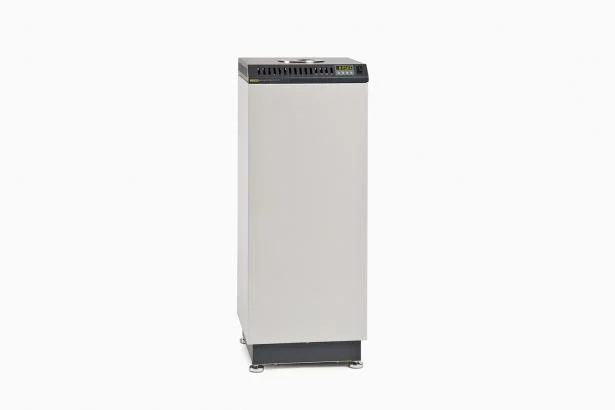
Contamination must be controlled during the annealing process. At temperatures above 500°C, the crystal lattice structure of the quartz sheath is transparent to metal ions. The thermometer must be cleaned and all contaminated materials removed from its sheath. Annealing can only be carried out in furnaces designed to avoid the release of metal ions during the heating cycle. Hart solved this problem in its 9117 furnace by using quartz encased graphite blocks that were specifically prepared to prevent contamination prior to assembly.
Features:
Temperature range: 300 °C to 1100 °C
Stability: ±0.5 °C
Uniform: ±0.5 °C at 670 °C (76 mm [3 in] at bottom)
Power: 230 VAC (± 10%), 50/60 Hz, 12 A, 2500 W
Display resolution: 0.1 °C below 1000 °C 1 °C above 1000 °C
Display accuracy: ±5 °C