Description:
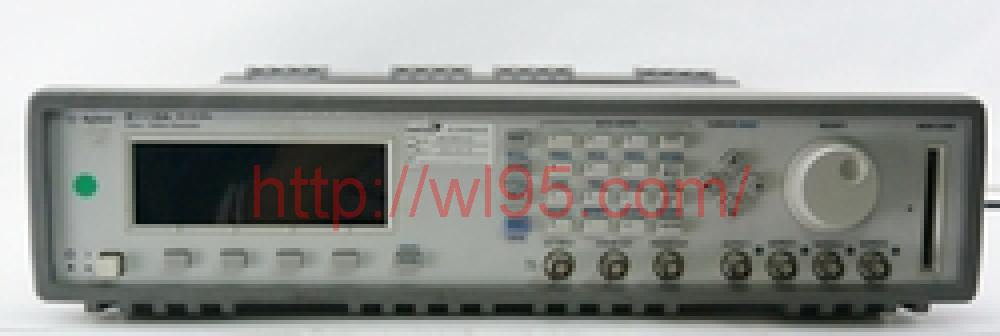
The 370 is a high-performance, GPIB-programable digital-storage curve tracer that provides static and dynamic semiconductor device measurements. This versatile instrument stimulates, measures, and displays the semiconductor characteristics of a variety of two, three, and four-terminal devices/ including bipolar transistors, field effect transistors, silicon-controlled rectifiers, diodes, thyristors, optoisolators, wafers, integrated circuits, etc. A variety of measurements can be performed using either grounded-emitter or grounded-base configurations.
The collector supply produces ac, rectified ac, or dc voltages ranging from 0 to ±2000 volts. This high voltage, combined with a current sensitivity of 100 pA/div, permits extended breakdown measurements on a device under test. A step generator produces voltage or current steps of either polarity for application to the base or emitter terminal. The step generator may also be operated in a pulsed mode to reduce DUT power dissipation.
In addition to conventional curve tracer performance, the 370 includes the following features:
1. Digital storage capability that allows bright and stable display and useful cursor measurements. The 370 can store up to 16 families of characteristic curves in a bubble memory cassette, display them on the crt, and send them for data processing via the GPIB. The bubble memory also provieds non-volatile storage for up to 16 complete front-panel setups.
2. Tow extended aquisition modes, called Averaging and envelope. Averaging reduces display noise in high sensitivity ranges. Envelope mode displays the maximum and minimum vertical or horizontal excursion of each curve, which is useful for detecting long-term variations such as thermal drift.
3. GPIB command-controllable front-panel functions. Nearly all are remotely controllable. (Exceptions are those controls intended only for manual operation, such as INTESITY, FOCUS, COLLECTOR SUPPLY HIGH-LOW control, etc. Also, curve data can be sent to or received from an external controller through the GPIB.
4. The CENTRONICS-compatible plotter interface permits sending displayed curve data and digital on-screen readouts to a digital plotter without an external controller.
5. Other features include an auxiliary voltage supply, cursor measurement readout, and diagnostic routines.