Product Description:
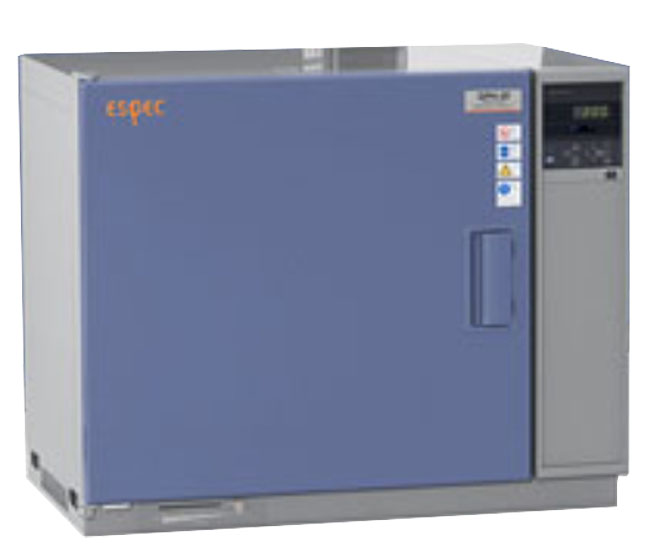
The ESPERK SEG-101H is a high-temperature test chamber with a large internal space and a wide temperature range, suitable for various high-temperature testing scenarios.
Temperature range: (room temperature + 20℃) ~ +300℃, capable of meeting various high-temperature testing requirements.
Internal dimensions: The internal dimensions are 1000×1000×1000mm, with a large volume, which can accommodate more test samples or larger-sized test objects.
External dimensions: Approximately 1650×1645×1300mm, with an overall volume that is moderate and suitable for most laboratory space layouts.
Weight: Approximately 500kg, the equipment is relatively stable and is not easily affected by vibrations or other factors during operation.
Box material: The outer shell of the box is made of high-quality steel plate with powder coating treatment, which has good wear resistance and corrosion resistance. The inner shell is made of stainless steel mirror plate or brushed plate, fabricated by argon arc welding, which is beautiful and easy to clean, and can adapt to high-temperature environments, and is not prone to damage over a long period of use.
Circulation method: It adopts forced hot air circulation to promote air circulation inside the box, making the temperature distribution more uniform and ensuring that the test samples are heated uniformly.
Product Features:
Precise temperature control: It may adopt advanced control systems from Espereck, such as the patented balanced temperature and humidity control system (BTHC), dual PID control, etc. This can keep the temperature fluctuations within a small range, providing a stable and reliable temperature environment for the tests, ensuring the accuracy of the test results.
Good temperature uniformity: The forced hot air circulation system can effectively reduce the temperature deviation inside the box. Under no-load constant conditions, the temperature uniformity performance is excellent, reaching approximately ±1℃, allowing the test samples to be tested under the same temperature conditions, thereby improving the repeatability of the test results.