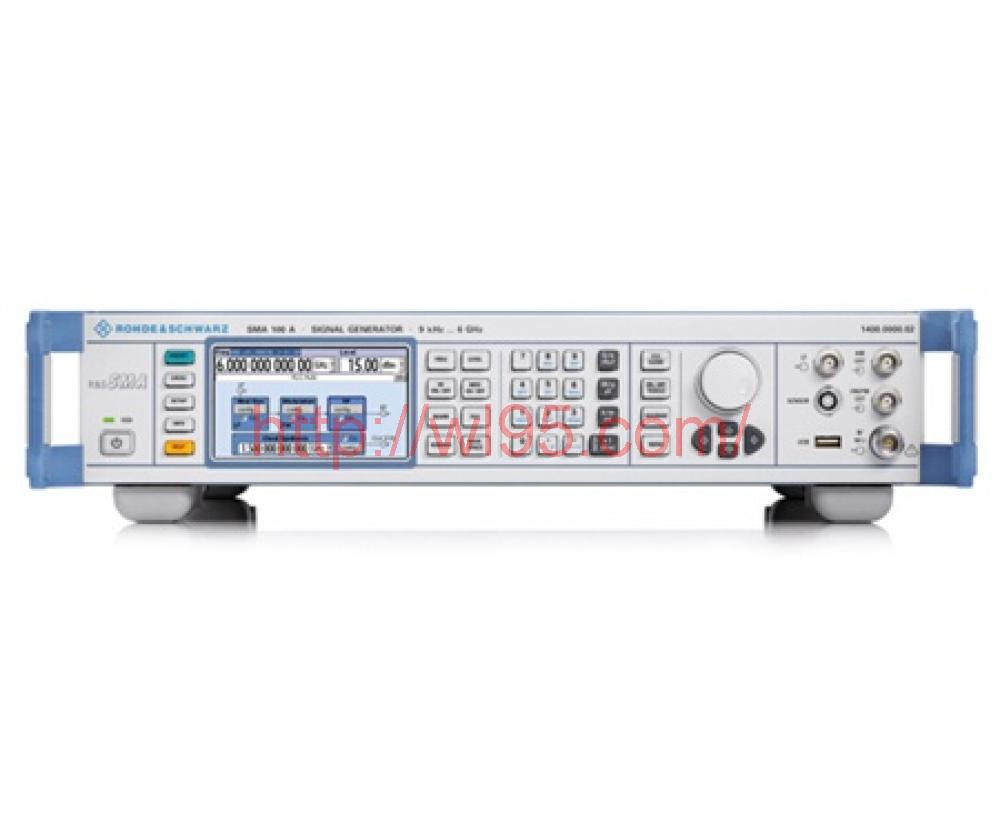
Product Description:
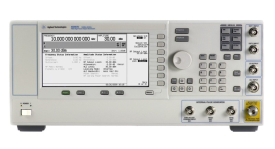
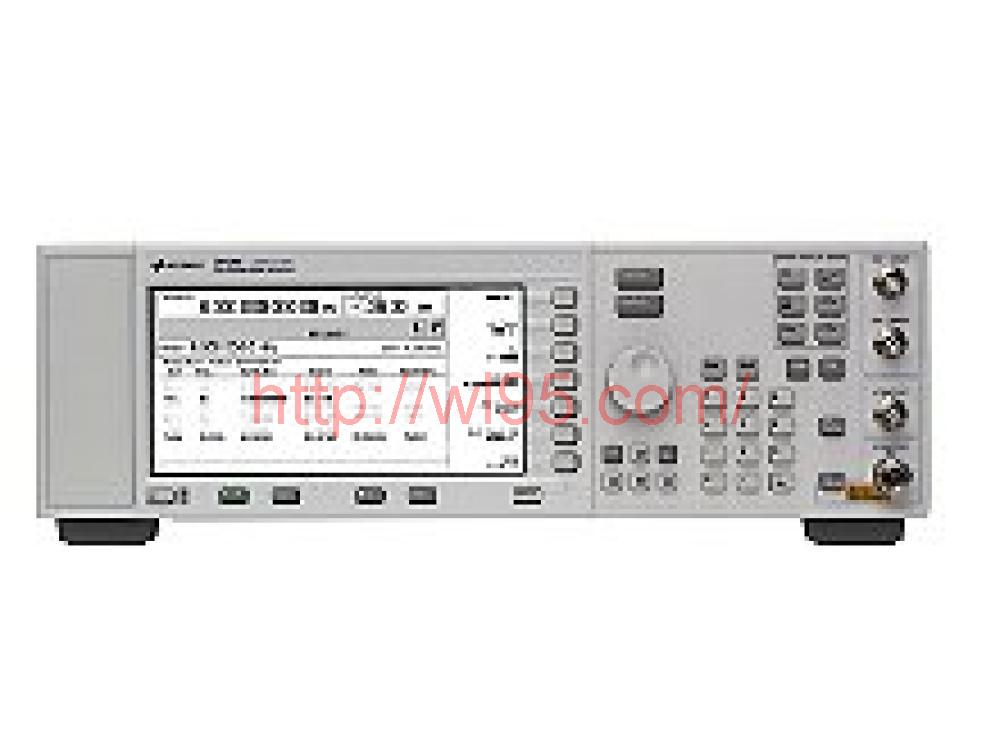
The E8257D PSG analog signal generator delivers industry-leading output power, level accuracy and phase noise performance up to 67 GHz (operating up to 70 GHZ). The E8257D PSG's high output power and superior level accuracy typically require no external amplifier to test high-power devices and minimize test uncertainty to identify errors early in the design process. World-class phase noise performance is ideal for local oscillators, low-jitter clock alternatives, and adjacent-channel selective testing. PSG delivers the performance you need when testing advanced RF and microwave radar, communications and control systems.
Customize PSG to meet your needs Customize PSG for today's RF and microwave test applications while easily upgrading as your needs change in the future. Choose from a variety of optional enhancements to configure the E8257D PSG for applications ranging from LO substitution and distortion testing to radar testing and jamming signal generation.
Features:
Wide frequency range - 250 kHz to 20, 40, 50 or 67 GHz (operating up to 70 GHz) with a resolution of 0.001 Hz
High output power - +23 dBm @ 20 GHz, + 17dBm @ 40 GHz, + 14 dBm @ 67 GHz typical performance with excellent level accuracy
World class SSB phase noise -10 kHz typical energy for carrier offset 10 kHz -115 dBc/Hz
Flexible analog modulation formats - AM, FM, ØM and pulse
Dual internal function generators - sine, square, triangular, oblique and noise waveforms
Easily scale frequencies - up to 325 GHz with the Oleson Microwave Labs (OML) millimeter wave module
Narrow pulse modulation - typical 8 ns rise/fall time and 20 ns pulse width from 10 MHz to 67 GHz
Multiple high-speed scanning modes - digital step/list scanning and analog ramp scanning, code compatible with Agilent 8757D scalar network analyzer
External control with PSA series spectrum Analyzers? Scalar network analysis capability when combined with any PSA with external source control options.
Backward compatibility - The same form factor and 100% code compatibility as previous generations of PSG signal generators